Controlled conditions
An experiment is one suite, one model, N trials per task, over every target you pick. Change one variable at a time; Arena holds the rest still.
EVALUATION CONTROL PLANE
Arena runs coding-agent harnesses on the same suite, the same model and the same budget. It keeps every trial's evidence and shows you, task by task, which one actually does the work.
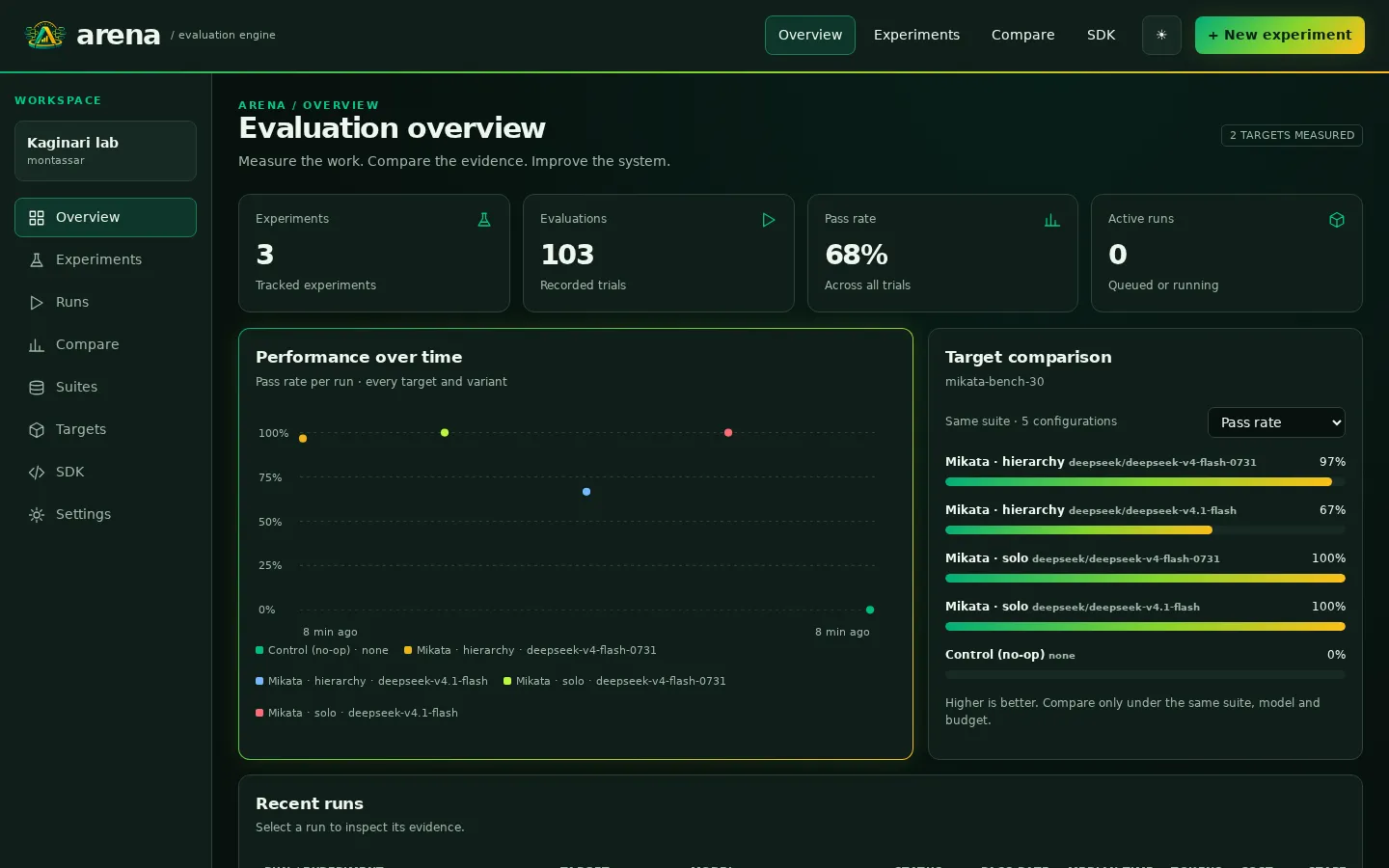
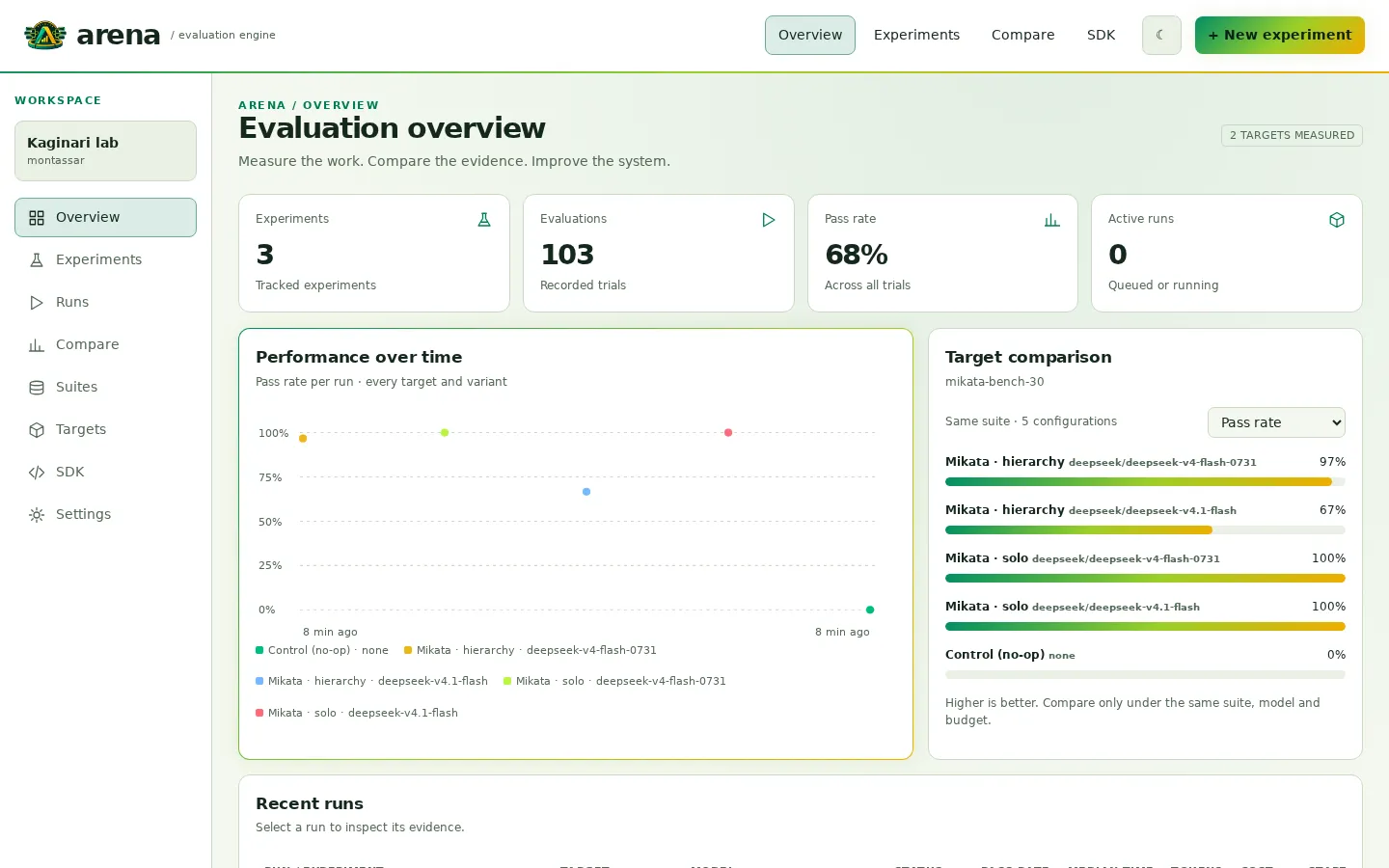
An experiment is one suite, one model, N trials per task, over every target you pick. Change one variable at a time; Arena holds the rest still.
Each trial keeps the harness's output, the verify result, time, tokens, calls and cost. Open any failure and read why it failed.
Mikata, OpenCode, Claude Code: a 20-line adapter each. Anything else reports through the SDK, from CI or from Terminal-Bench through Harbor.
HOW IT WORKS
FROM OUR OWN LAB
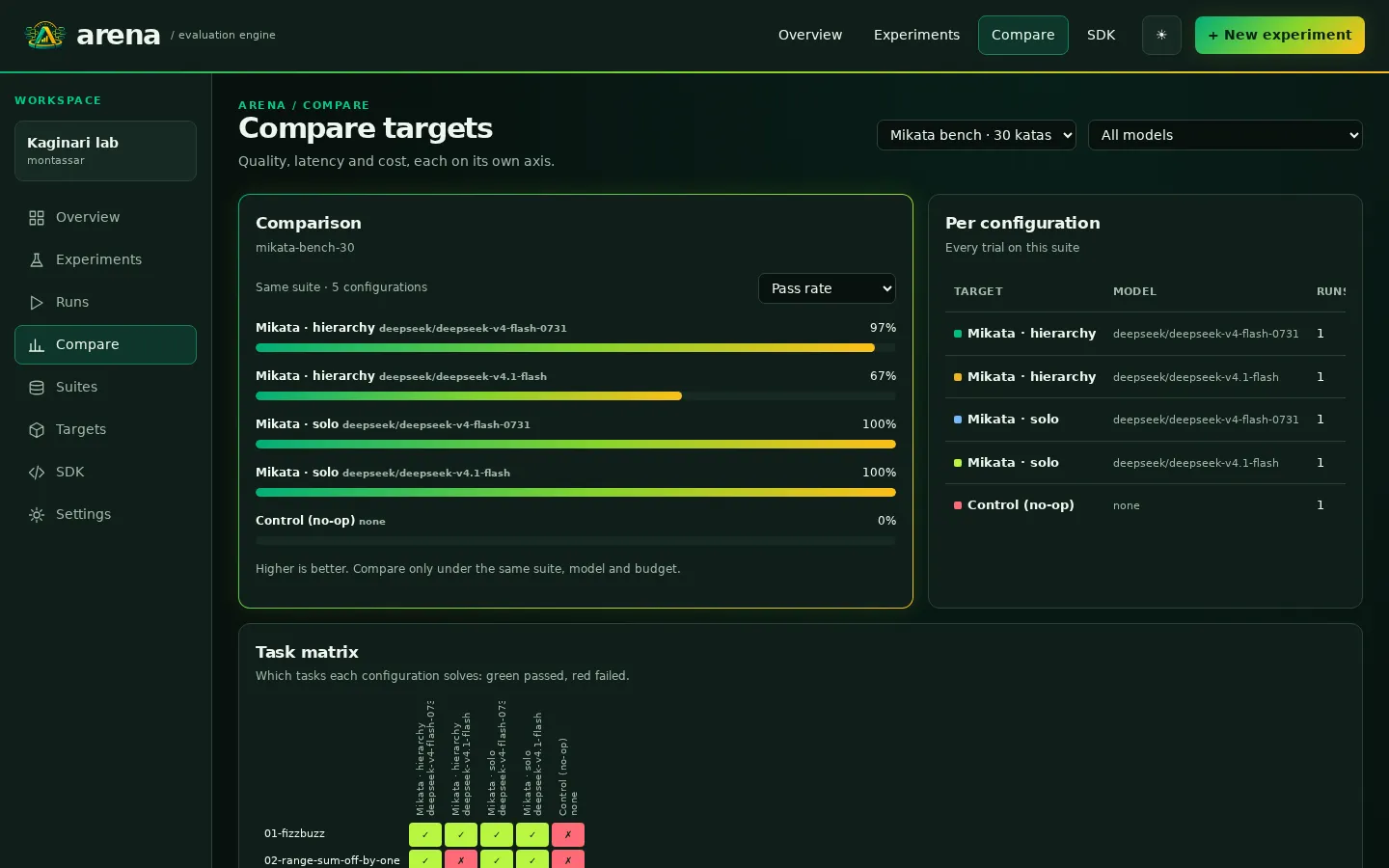
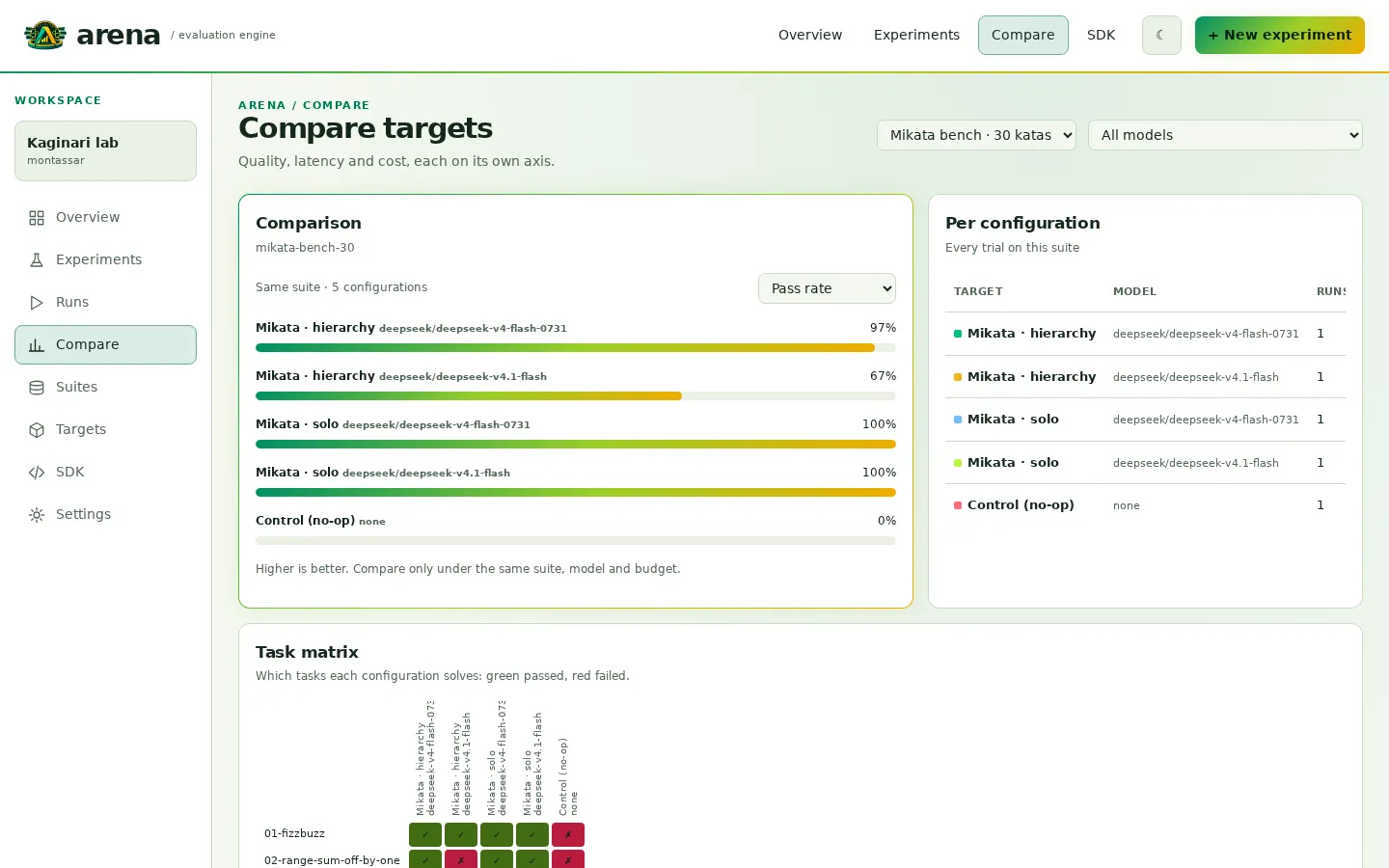
Kaginari's first suite: 30 small Python tasks, from FizzBuzz to a Caesar cipher. Mikata ran each alone, then handing the work down its hierarchy, on DeepSeek V4 Flash. The control touched nothing.
Mikata bench, deepseek/deepseek-v4-flash-0731, November 2026. One trial per task: a first measurement, not a leaderboard.
SDK
Register a target, open a run, report each trial, close it. Rust and Python clients, or plain HTTP with an Arena API key. Results land next to the runs Arena executed itself, on the same axes.
let arena = Client::new(url, key);
arena.register_target("my-harness", "My harness", "")?;
let run = arena.start_run(&NewRun::named(
    "Nightly", "mikata-bench-30", "my-harness",
    "deepseek/deepseek-v4.1-flash"))?;
arena.report_trial(run.id, &Trial {
    task: "01-fizzbuzz".into(), passed: true,
    duration_ms: Some(23_200), ..Default::default() })?;
arena.finish(run.id, "completed")?;
SECURITY
Arena runs inside your network, reachable over your VPN only. This page is the only public part.
People sign in through your Keycloak; only the groups you name get in. Programs use API keys stored as hashes, shown once.
Provider keys are read from Vault per trial, handed to that trial's process only, and scrubbed from every log Arena keeps.
It runs today on Kaginari's own infrastructure, measuring Mikata and Hivemind's harnesses. Ask a Kaginari engineer for access.